

How to Make Messaging Easier: The 20-Year Expert's No-B.S. Framework
A version of this article originally appeared in my newsletter. Sign up here for subscriber-only insights every single week.
I've been working on messaging development for over 20 years—both in-house in the public and private sectors, and now for 15+ years as a marketing consultant—but I’ll let you in on a secret: You’ll rarely see me use that word in my marketing. Why? Because the term "messaging" means a hundred different things to a hundred different people, and I cannot stand when foundational concepts get lost in translation.
When businesses ask me how to make messaging easier, or how to develop a message they can use in the marketing, they’re usually frustrated by the noise—even if they can’t name the problem.
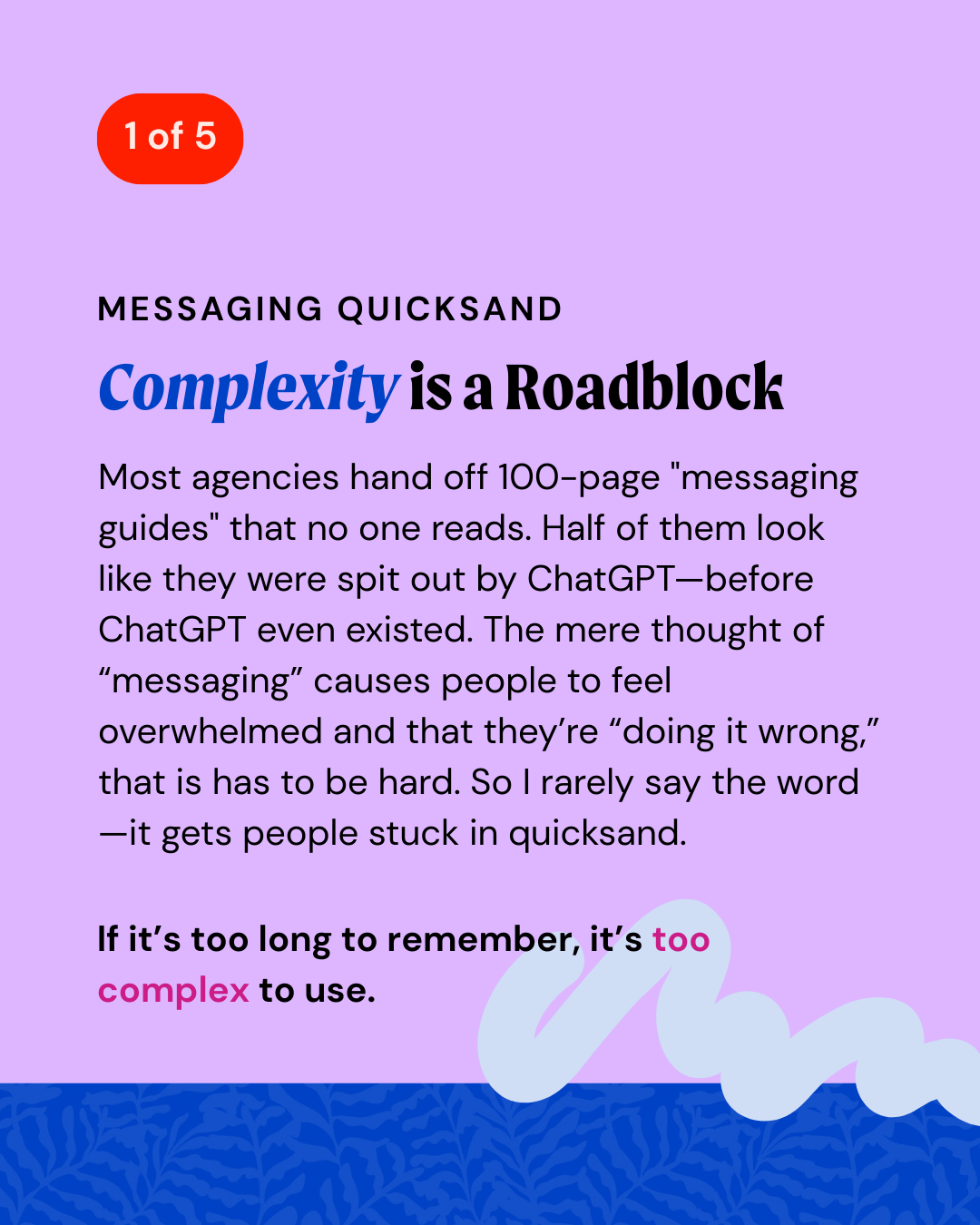
Agencies love to hand off 100-page “messaging guides” as deliverables. (Fun fact: On forums I lurk on, I hear a lot of these doorstopper guides these days are being quite obviously generated by ChatGPT, and clients are very unhappy.) Other "experts" might give you a single page or lump messaging in with a “brand voice” document. None of these approaches to developing messaging are inherently wrong, they just prove how confusing the concept of messaging can be.
Frankly, we don't need this level of confusion, especially when you're a busy business owner or solo consultant. We need a messaging method that works in the real world.
Step One: The Messaging Simplicity Imperative
The trick for how to do messaging effectively isn't adding more complexity; it’s removing it. Simplicity is a feature, not a glitch.
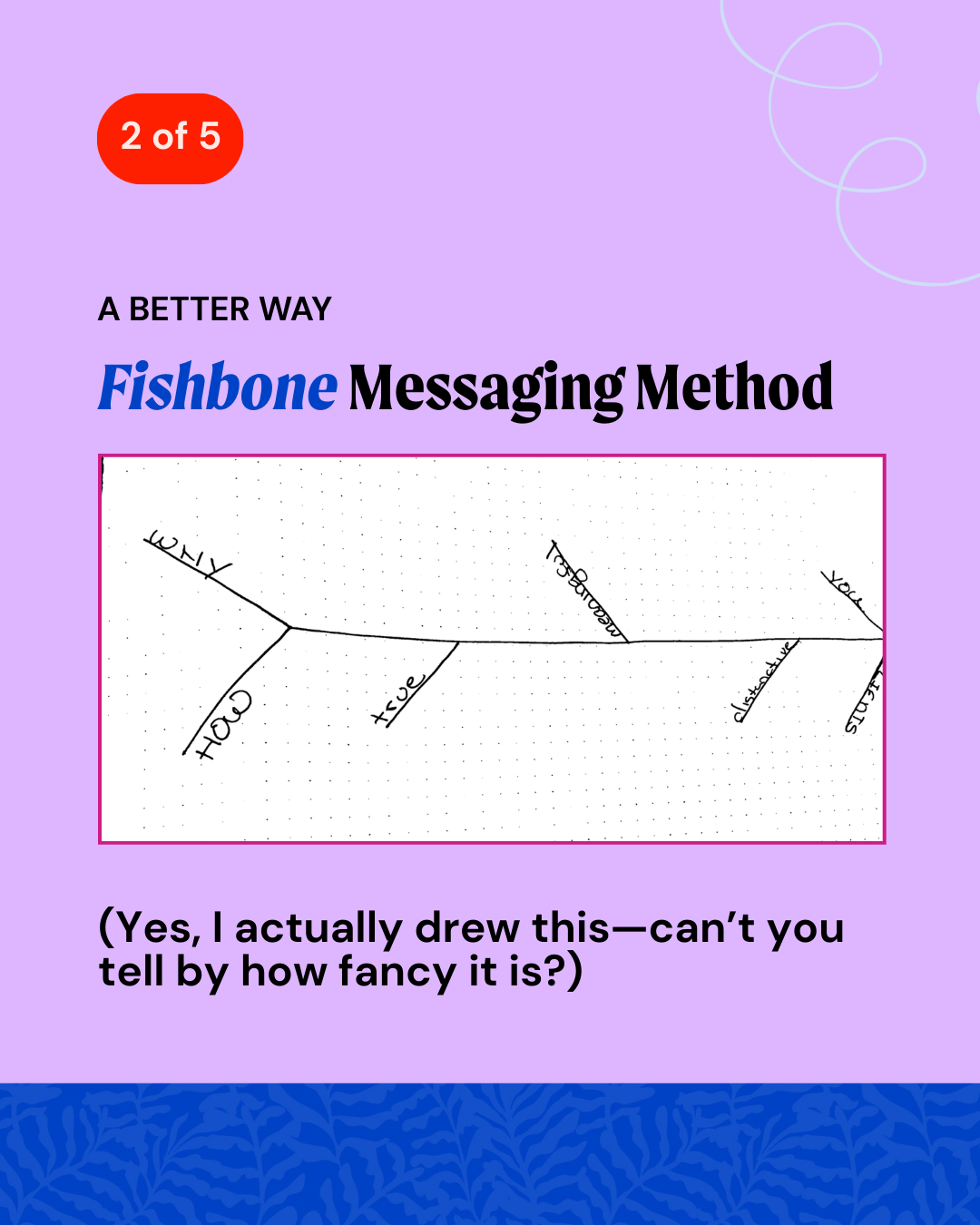
I've simplified my decades of experience into a dead-simple framework designed for clarity and speed. It’s built on a modified Fishbone Model, connecting cause and effect.
I keep meaning to do a "branded" version of this, but here is my actual “super fancy sketch” of the Fishbone Model I use with clients:
My Message Method is simple. We start with two core questions, and then we stress-test the answers, twice.
Here is the step-by-step breakdown of exactly how we use this simplified method to find your core message. We move from left to right in the sketch.
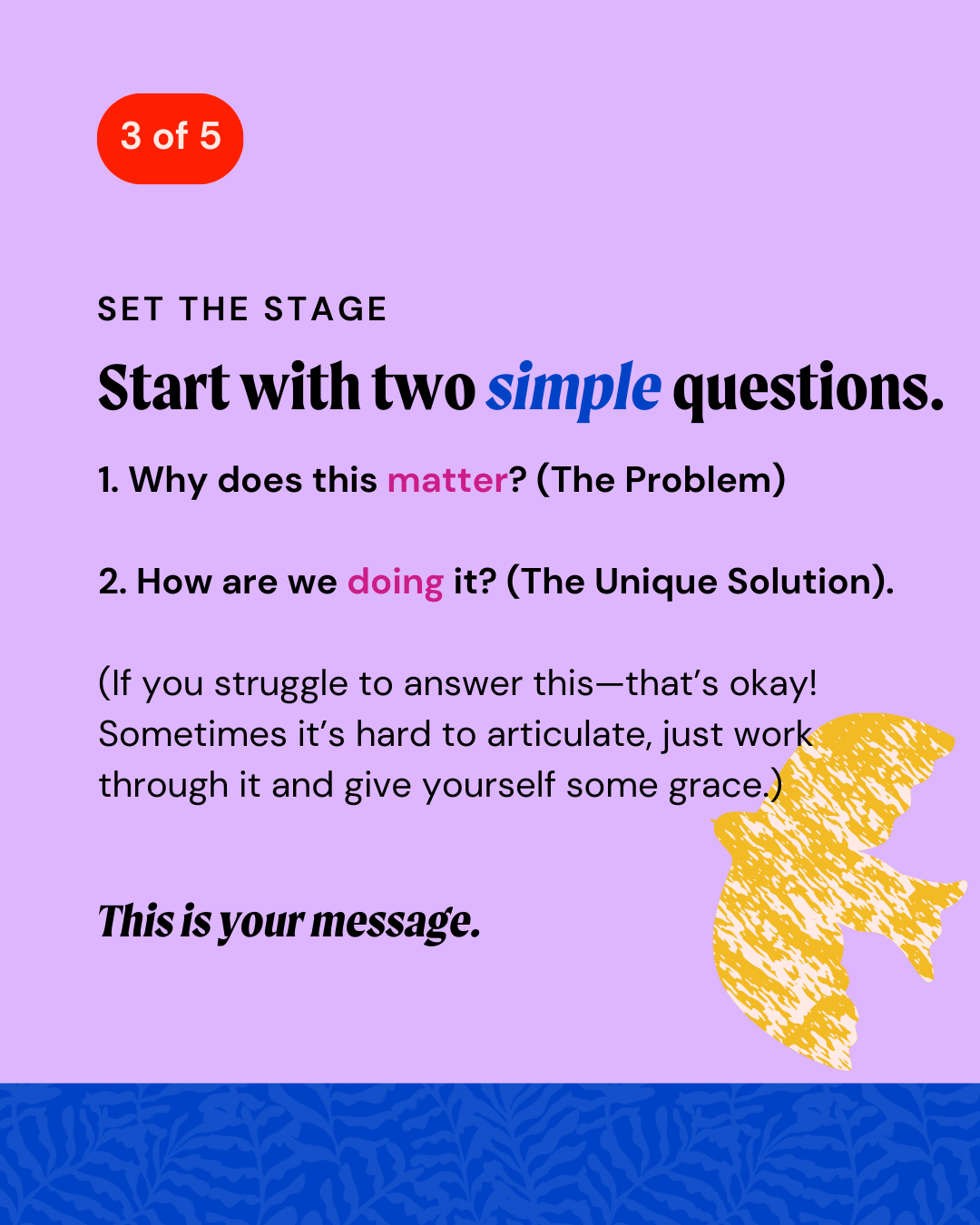
Step Two: Create Your Marketing Message with Two Core Questions
This is where your core message lives. Forget the 100-page guide. If you can answer these two questions clearly, you have the foundation of your message:
Why does this matter? (This is the cause—the problem you solve.)
How are we doing it? (This is the effect—your unique solution.)
When I co-create frameworks with clients, we nail down these two truths first. Every other piece of content you produce comes from these answers.
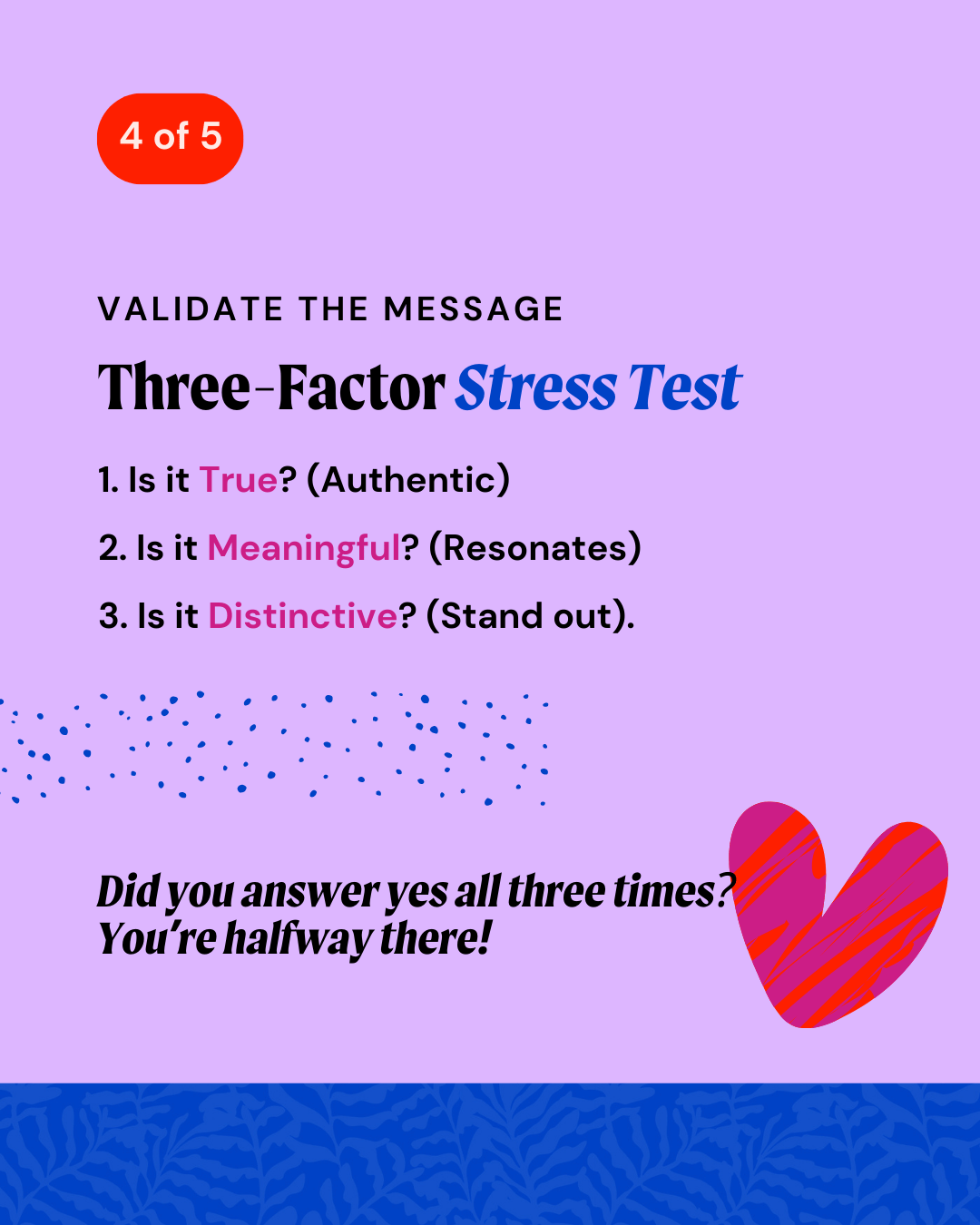
Step Three: Stress-Testing Your Messaging Foundation (The Three-Part Filter)
Once you have your initial answers to “Why” and “How,” you must put them through three rigorous filters:
Is this true? (Is it factual, authentic, and something you actually deliver?)
Is this meaningful? (Does it resonate deeply with your target audience?)
Is this distinctive? (Does it genuinely set you apart from your competition?)
If your message passes all three, you have something strong. But we aren’t done yet.
(And if you’re struggling with this stop, just sit with it and contemplate how you can shore up these foundations—it’s very common to find this part a bit frustrating at first._
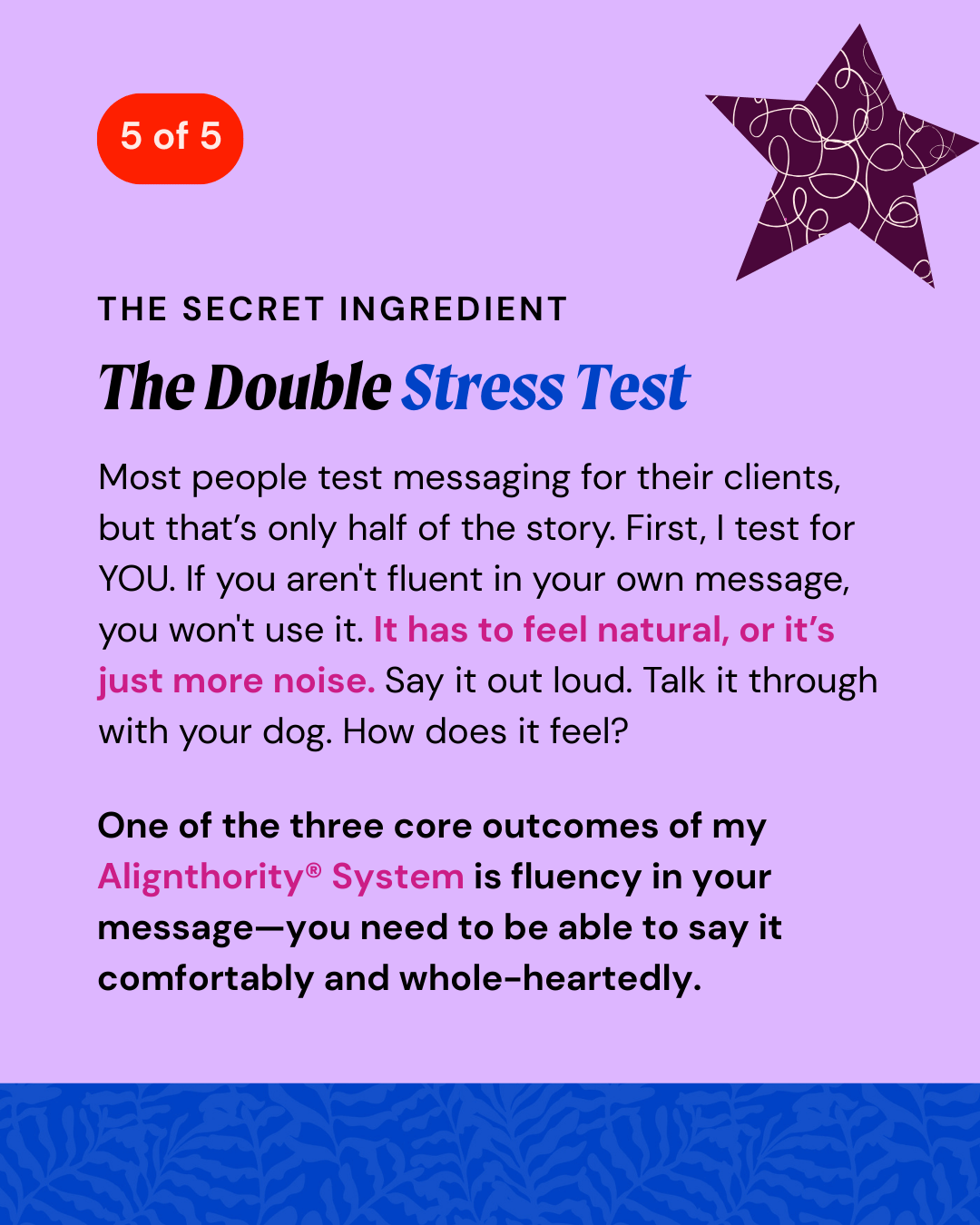
Step Four: The Double Stress Test Messaging Secret Ingredient
This is where my approach breaks from the traditional models, and it’s the definitive answer on how to make messaging easier to sustain long-term.
Most models tell you to only test your message with your clients. But you—the owner, the founder, the consultant—matter here just as much. You run this stress test twice.
Test 1: Does the message resonate with your audience/clients?
Test 2: Does the message resonate with YOU?
That “you” factor is critical. If your core message doesn’t click with you—if it doesn’t feel natural and authentic to say—you won't use it consistently. You’ll never become fluent in it (one of the core outcomes of my Alignthority® System) and you won't be able to confidently train your team to use it. The list goes on.
When a message is hard for you to deliver, your entire operation feels difficult, and we hate hard! This is why so many people hate marketing!
Simplicity means finding the intersection of what your clients need to hear and what you can authentically repeat day in and day out.
Prefer a visual look at this process? Check out these slides that break this down. (Click to enlarge.)
Key Takeaway: The Message is the Foundation of Your Marketing
So, where is that final, "polished" message hiding? It’s inside the answers to those two core questions: Why it matters and how we do it.
The framework gives you a confident, repeatable message directly from those simple answers, provided they pass the True/Meaningful/Distinctive test every time, for both you and your client.
Is it simple? Absolutely. Is it effective? Absolutely.
Ready for support in your messaging? The best first step is a one to one strategy session, or go all in with Spark Sessions.



Struggling with your messaging? There’s a good chance it’s not a you problem. I break down how to simplify this complex process in just a few steps.