

You may have heard some excitement about Google Search Console now including AI metrics in their traffic reports. You can read the official announcement here. But, because I know there's been a ton of chatter about this on social media—much of it fairly misleading—I thought I'd break down what this really means for you, day in and day out.
Remember, I always wear a marketer’s hat first, so that’s the lens I’m looking at this update from. I care about one question: Will the help your marketing be more successful in meeting your business goals?
What is Google Search Console?
First of all, if you're not familiar, Google Search Console (GSC) is a tool Google provides to help you better understand how your website (and other properties like YouTube and Instagram) perform in Google search.
It's an invaluable resource, and having a properly set up GSC is a non-negotiable for anyone serious about their marketing. It allows you to see what searches your site is being display for, what pages are indexed and available for search, and super useful information such as which pages have 404 (not found) errors.
GSC is NOT a ranking factor (though it provides information that can help you take action to improve rankings) nor is it reasonable to expect an error-free website with every single page indexed and perfect according to GSC. (Flagging normal GSC errors is one of the tactics that shady SEO companies use to manipulate people into using their services.)
Google Search Console Updates in 2026: Additional Properties & Generative Search Results
This year, Google has added some enhancements to GSC: first, they added the ability to add YouTube and some social media platforms as properties, and more recently, they rolled out the aforementioned AI visibility enhancements.
I assumed that this new feature would work similarly to that of the traditional search data from Google. Here's what mine looks like:
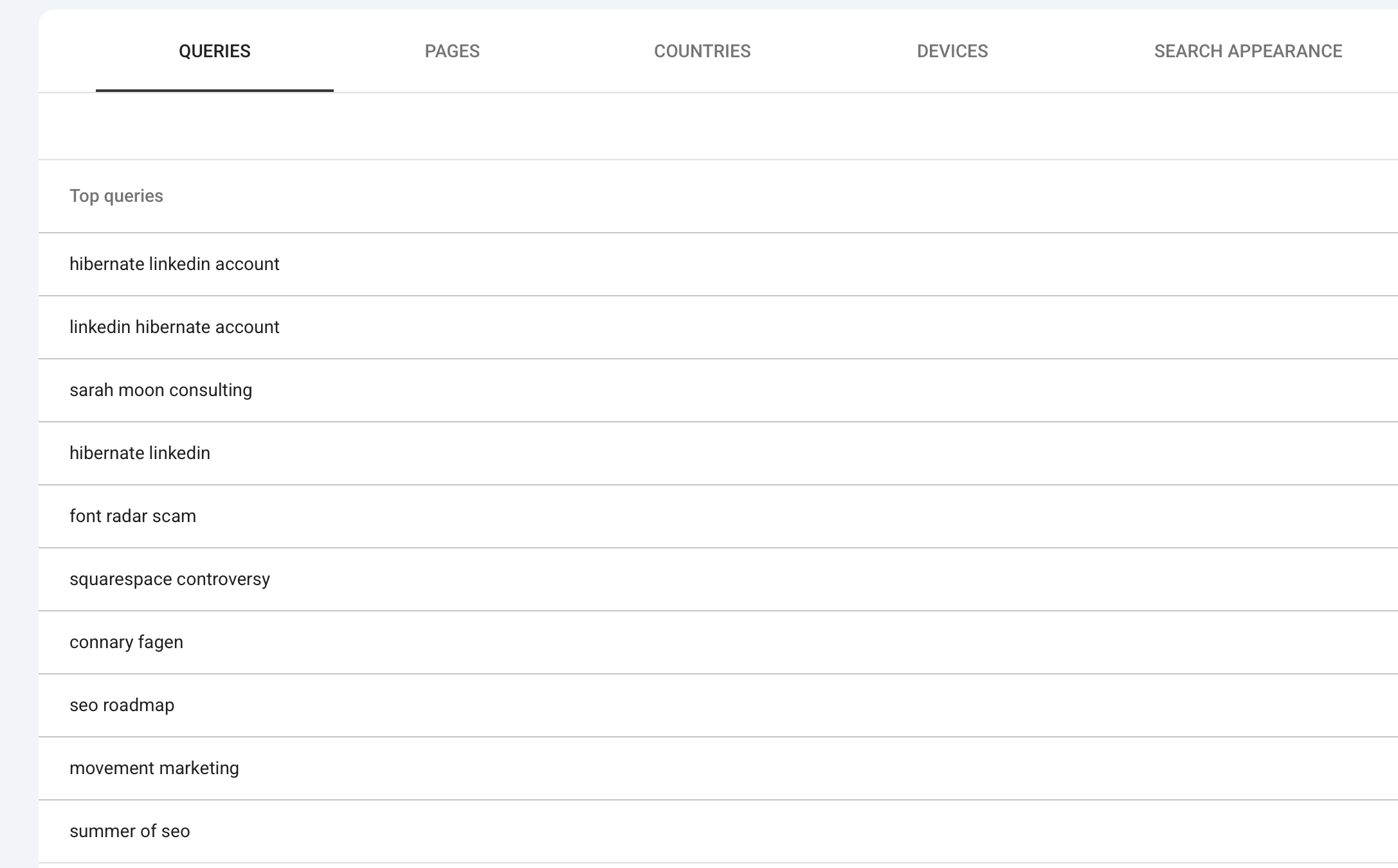
This is incredibly useful information, as I can see the queries, destinations, and other data about what Google's algorithm chooses to display from my website. You can drill down quite granularly, seeing what queries, for example, drive traffic to a specific page:
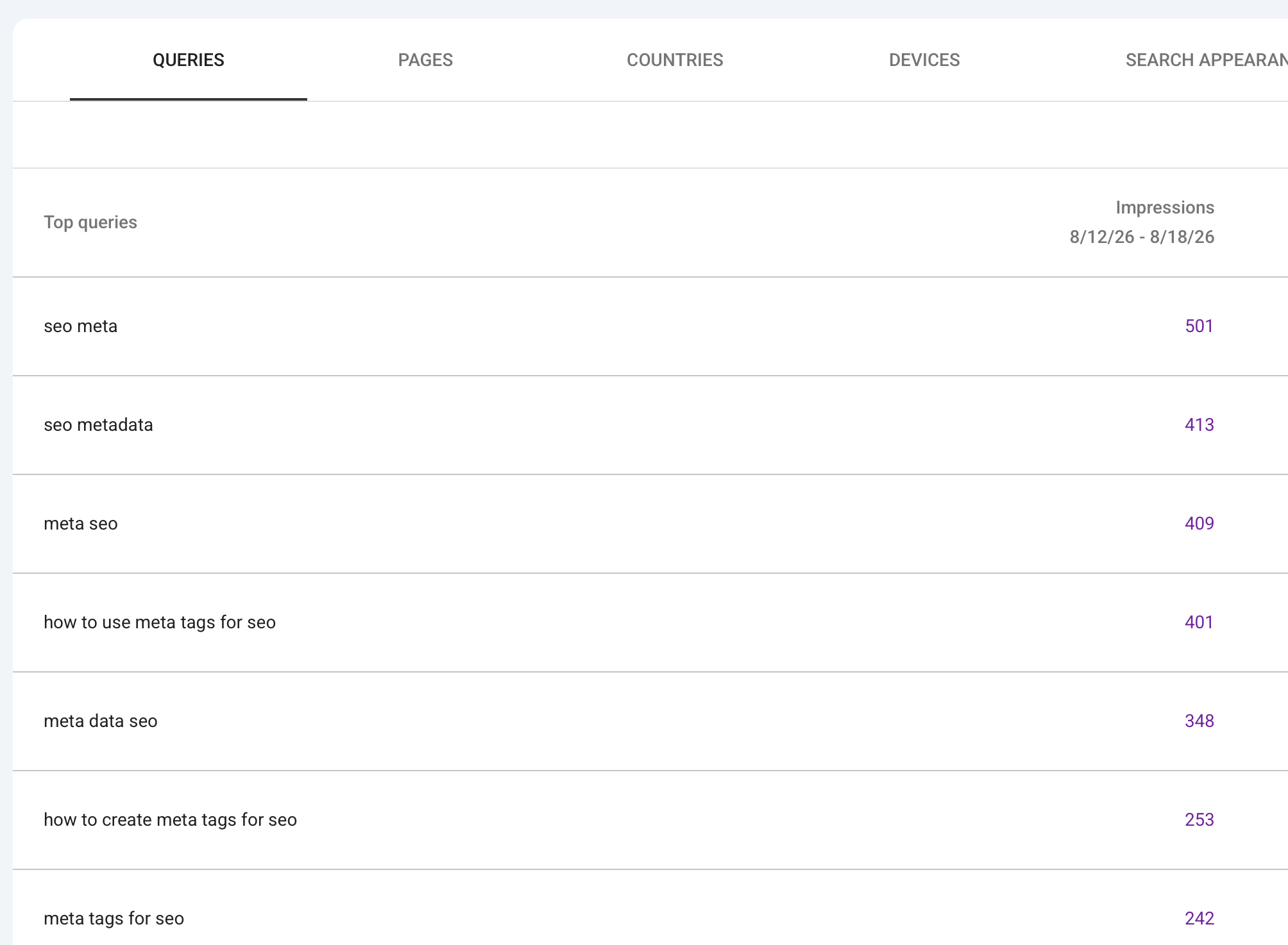
In this example, I looked to see what queries (literally things people type into Google) that bring people to this page about meta tags and SEO. This allows me to identify gaps, think about how to improve the content, even adjust headings. Cool, right?
I was surprised to learn, however, that the generative search panel is a bit more... sparse.
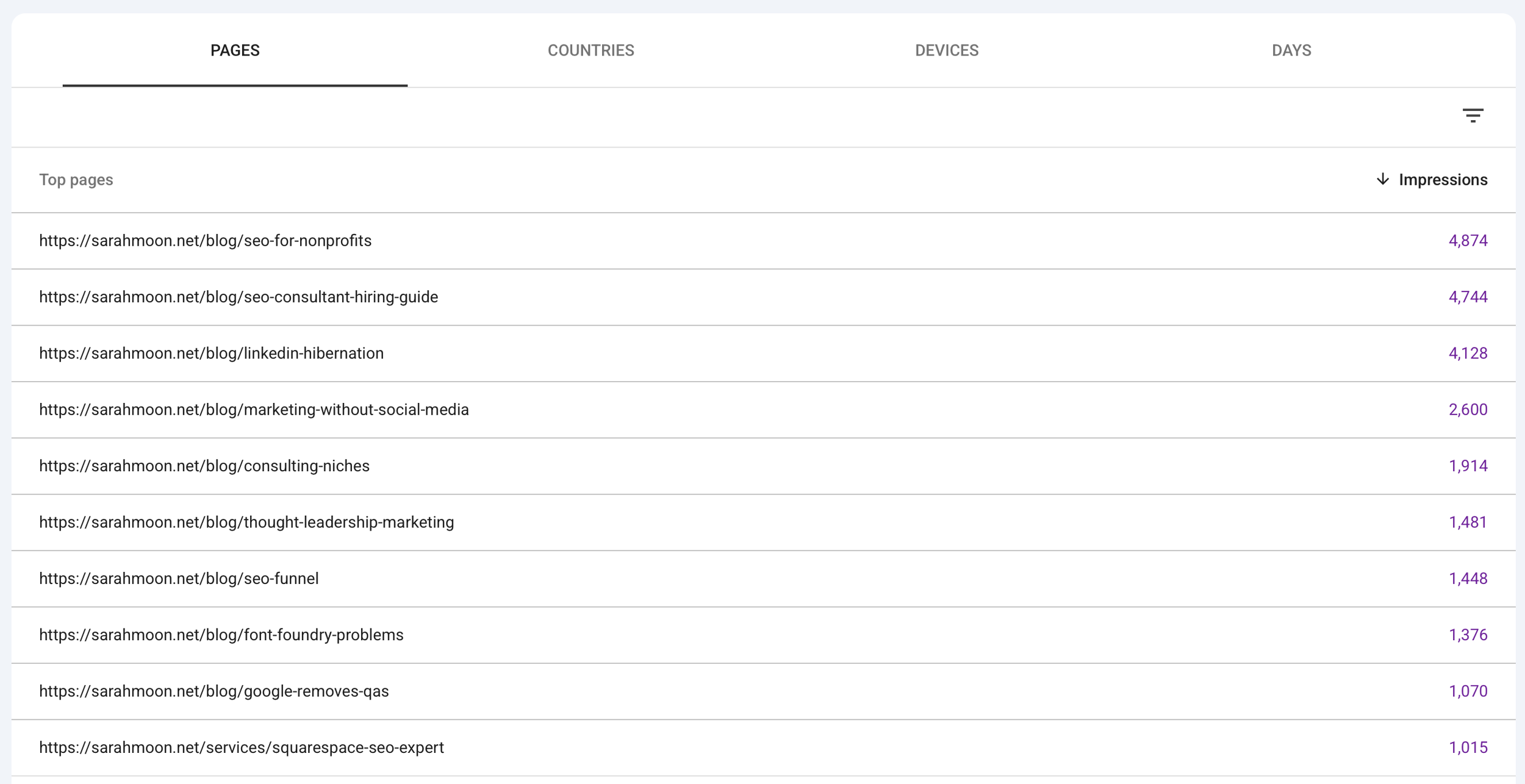
Notice what's missing?
The actual query that triggered the page to be displayed in AI search is missing from Google Search Console.
As a result, we know what pages generative search is citing, but we don't know anything about the context. This report is far less useful than those we get for traditional search.
Now, as an important aside: There are a number of apps and tools which claim to reveal this information, but every single one I've tested reveals what I believe to be AI-generated guesses about the queries, not the actual queries. (Basically the "prompts" the software claim are in no way natural, human language—it's glaringly obvious what's happening.) So, even with premium software, we really do have a massive gap in information.
I don't want to say that this information about generative search in Google Search Console is irrelevant, because there are some solid actions you could take as a result of this information inside GSC.
Here’s is what I’d advise, as an SEO expert, you prioritize when examining these Generative Search Reports inside Google Search Console.
Key Takeaways About Google’s New Generative Search Report
Limited Granularity in AI Reports: Unlike traditional Google search reports in GSC, the new generative search (AI) metrics do not show the actual search queries or prompts that triggered your pages to appear. You only get to see which pages are being cited, leaving a major context gap.
Third-Party AI Tracking Tools are Unreliable: Paid software claiming to reveal the exact user prompts triggering AI search results appear to be providing AI-generated guesses rather than actual human query data.
Generative vs. Traditional Search Discrepancies: Sites typically see noticeable differences between which pages rank in standard search results versus which ones get cited in AI responses.
Actionable Next Steps:
Update neglect content: Identify older or out-of-date pages that AI is citing and refresh them for accuracy and brand consistency.
Balance topical coverage: Check if AI search is over-indexing your brand on a single topic, then publish content to round out your expertise.
Focus on Alignthority® Over Keywords: In a post-keyword era with imperfect attribution datasets, marketers shouldn't rely on hyper-specific keyword metrics. Success depends on building broad topical authority so your brand becomes the obvious choice for both human audiences and search bots.
Look at the differences in pages surfaced in traditional search vs generative search—every site I've looked at has fairly significant differences. These differences could help guide your content strategy.
Identify what’s cited that could use updates. I had a couple of pages cited in generative search that were quite old and neglected, so I updated them and made sure the information was accurate and consistent with my brand. Next on my to do list is updating this post: https://sarahmoon.net/blog/seo-funnel
Scan the generative search report and see if it's telling a complete story about your brand. My search results are overly weighted towards SEO content, so I'm going to do some updates and new articles to rebalance my content.
All of this is more evidence of my belief that in this Post-Keyword Era, we have to double down on topical authority, and really own our brands, and our expertise.
It is your responsibility—if you want to be visible online—to prove to people and bots via your body of work that you're the authority—what I've been consulting on via my Alignthority® system for years. We can't rely on simple attribution, we need to be the beyond a shadow of a doubt obvious choice, because relying on imperfect datasets is no longer an option.
Yes, look at the data, adapt the pieces that help you make better decisions into your overall business strategy, but stay the course and keep following your plan.








Wondering what AIO is all about and what you need to do to prepare your Squarespace site for the post-keyword era? I break it all down in this simple, clear FAQ.