Note: This originally appeared in my newsletter. Sign up for more essays like this.
We are in the process of having a bunch of super annoying work done on our house. If you'e ever had to deal with this, you know what it means: getting bigs, managing different contractors, lots of noise and disruption, and just... a ton of stress.
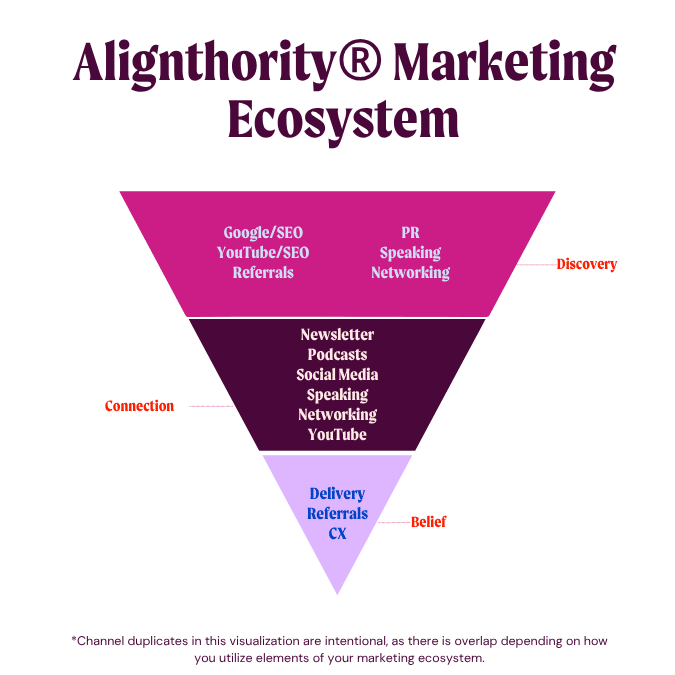
It's also been a great reminder about why I include customer experience as a key component of a successful marketing ecosystem.
First of all, what exactly is customer experience (often abbreviated “CX”)?
To answer that question, I turned to an expert, Mollie from FernCX and FernCRM. Here's what she had to say:
Client or customer experience (CX) is the onboarding, nurturing, and marketing your existing clients/customers sees, that inspires them to refer you, tag you, and buy again. A great CX shows up as higher profit margins and lower expenses because your buyers do the marketing for you.
Sounds pretty great, right? Your buyers effectively become brand ambassadors and “sell” your services for you—even to themselves. We love that! This means you can spend less on marketing, hop off the hamster wheel, and do more work for well-aligned clients or customers.
Let's go back to my saga of having to deal with contractors and all of that. Folks, it's an exercise in what good customer experience is not. Here are a few anecdotes:
A countertop copy that I had already signed a contract with made it incredibly difficult to actually pay them.
The same company just... didn't answer any of my questions about the installation process.
A roofing company came and used a generative AI app to create a quote, instead of including the information I'd shared with them during the evaluation, which only included a single piece of plywood (we needed all new plywood, which is a whole other story).
We have to store some stuff, and the storage company's app broke so we couldn't check in. No one on-site could check us in (because it all has to be done in the app, for some reason), and so the company canceled our reservation because we didn't check in.
Others simply didn't reply to my inquiry, not even a "hey we're not booking small jobs" note.
Here's the thing: None of us are perfect and nail customer experience 100 percent of time. I think we all understand that.
But this experience has really shown me that a lot of companies, small and large, don't think about customer experience as an asset, a marketing tool, at all. And they're leaving money on the table as a result.
Instead of seeing customer experience as a way to retain customers and create future ones, the perception is that customers are an expense, a drain.
We see this play out in the software subscription space too—look how so many have put up huge barriers between customer support and the customers. It creates a hostile relationship, and down the road, it impacts the bottom line.
But the norm with those companies only care about quarter to quarter revenue, not building for the future and thinking of their customers as long term relationships they should be cultivating.
And this is why people don't sit around and rave about their bookkeeping software, or the project management software, or their email marketing tools. They know that they're just a number on a spreadsheet because that's the message that's sent to them every time they have a customer interaction.
However, this is profoundly short-sighted. Investing in customer relationships is smart marketing.
This can be a simple as offering special rates to returning customers (I do this with my Alignthority® Strategy Sessions and people love it), making it easy for people to ask questions, or something like what one of my clients does, who's in the home improvement industry, and that's providing a detailed, concrete project timeline with all the resources a client may need (such as "these are the days your kitchen won't be available, so be sure to make plans for dinner").
None of these things that make for good customer experience are hard, expensive, or complicated.
Which, to me, makes customer experience a no-brainer marketing strategy everyone should deploy. Imagine if that weirdo countertop company made it easy for me to pay my invoice—I would have recommended them to the three friends who asked me about them. But, instead, I said, "They did good work, but made me feel like they hated having me as a customer."
In a world where everyone is teaching "one cool trick," from seven part funnels to self liquidating offers to masterclasses, it seems like getting back to the basics is smarter than ever. What do you think?